Friday, 2 October 2009

The world needs a little bit of the English

0 comments
It just doesn't phase us. >>
reggybalboa @ flickr


Reading this post's title, you may gasp and whinge at the colonial undertones, and bemoan, "Oh no you didn't!" But, contrary to a glancing moment's thought, a little bit of appreciation - and maybe, adoption - of the English mindset may do a bit of good in a world increasingly full of radicalisation, the so-called 'clash of civilizations', and fear.

I was brought to the attention of a particular article in the Guardian this morning. My flatmate (or, roommate, in North America) forwarded me the article, written by one of my favourite comedians, Dara O Briain. Dara, if you've never seen him in action on Mock the Week or Live at the Apollo, is a broad-chested, tall (at least from what I can tell on BBC iPlayer) Irishman who, despite casual allegations that he looks like a member of the Russian mafia, to me looks like a very huggable bear. An innocent one at that.

In this particular article, he's collected his conclusions about the English, their country, their behaviour, their habits. Like Dara, England and its largest city, London, were both foreign to me before 2007. My image of England pre-2007, which consisted of Princess Diana, the Beatles, Blair, David/Victoria Beckham, Hugh Grant and Bridget Jones' Diary, was as warped and bizarre as Dara's image of England derived from That's Life! So, when I did arrive that nippy September morning at London Heathrow, dragging my way to the Picaddilly line with all my luggage, one can only imagine - and I'll be honest here - the reality check, the disappointment, and the wonder as to why I chose England, over all the other countries in the world, to spend the next half a decade in. In the weeks that followed, I became more than just privy to the drinking, the smoking, the dirty streets, the packed buses and unventilated (and un-air conditioned!!!), tardy or broken down tube trains, and of course, the shock that not all English men had posh accents and looked/acted like Hugh Grant. And it was all too different from the England I had imagined.

Yet, the price I paid for the damn-expensive piece of paper from one university did have some effect on my merciless, and probably naive, judgment on England. I became acutely aware that the world is a complicated place that is becoming unimaginably convoluted with the process called globalisation. The knooks and crannies of what such a process entails, I won't get into here. But I will say that, with that complication comes a lot of fear and uncertainty. We fear resorting to relativism, because that could undermine the 'core' values we stand for. But at the same time, we fear the radicalisation and the fundamentalism that stands at the other end of the spectrum, because that, too, would only serve to undermine, rather than support, the long-standing values of the Western world.

So what can one do? How do we deal with it all? Take Dara's joke about how Londoners reacted in the wake of the July 2005 bombings:
The media reacted as if the attacks would, or should, be greeted like 9/11 had been in New York. Of course, the attack was nothing like 9/11 and besides... this is London.

They've had the Blitz and then there was the IRA...

In fact, the response in London to the attacks was much more: "There's been a bomb on the Piccadilly line!" (Long, thoughtful pause and then, like a problem being solved...) "Well, I can get the Victoria line..."
It's this comparatively non-chalant attitude about the things that happen in the world around us that I think is increasingly important to foster. While Dara's joke and the reality it points to may be an exaggeration, it's the sense of being reasonable, and realistic about events and people that perhaps, we should all learn to adopt.

The 'realism' I note here can also be seen in English soap operas. As one flatmate recently pointed out to me, whereas North American soaps are full of slim, relatively good-looking people with perfect white teeth and glowing skin who've all had the lucky genes of also-relatively good-looking parentals and thus - here's the key - only represent a very small portion of the North American population, the cast of English soaps are all ordinary people. Sure, there may be a few over-the-top glamourites in there, but on the whole, they look like normal people. And there's something comforting in that.

In writing about the appreciation of the English, one cannot purposely overlook the undersides: the binge-drinking culture. This is where my North American health-conscious mentality kicks in. Binge-drinking can't be good for you. It just can't. Consuming that much alcohol in that short period of time, regardless of how many alcohol-processing enzymes you've cultivated over generations, simply cannot be conducive for the health of your liver. And cholestrol levels.

Or the subtle ignorance that comes with the blurbs that come when an English team is beaten in football: "This, in a sport we invented." As Dara rightly points out, the English never invented football (and the Americans never invented basketball or baseball) - "They codified it, which is a different thing altogether":
You didn't invent football because you didn't invent the ball, or kicking, or fields. We should only be grateful that the Victorians didn't gather together in a room and write the first rules for the use of the wheel, or fire, so that you can claim credit for them as well...Villages have been dragging, pulling, kicking and running against each other for millennia; you just happened to be the ones with an empire when the upper class took an interest.
Well put, Dara, well put.

England once had an empire, a vast one at that, and that historical fact cannot be erased. But as Dara says, the superiority-complex that arises from a historical - not present - fact can't do much good in the complex world that is the present-now, and the English should "snap out of this" (as should other countries, too). But there is something to be said for the humility and realistic spirit that lies on the flip side of that coin. The ability to carry on without being enraptured by the effects of a bombing (although this begs the question as to what would happen if Big Ben suffers an attack not from an alien invasion but from another country), or to be truthful to reality in representing human drama (although perhaps 'truth' is not exactly the objective of American shows, and is questionable as to 'truth' can be used in the same sentence as 'soap opera' to being with) can be indicative of other elements of society and human behaviour. It really comes down to keeping things in context and perspective. And despite all bemoanings, it's a mentality modern societies need, and there's no harm in turning to the English for that.

Read more!

Thursday, 1 October 2009

The Global Economy and Transatlantic Relations

0 comments
<< A fragile relationship.
@ Spero News


Since the start of the global financial crisis in 2007, the United States has largely been viewed, rather negatively, as a promoter of unfettered capitalism. This perception has caused strife in the transatlantic relationship as some have argued that America’s lead on financial deregulation has put further strains on the economic systems of European member states – where social programs are a prominent feature of the collective landscape.

According to one report, Spain has experienced its worst contraction in 40 years and Germany, Europe’s economic powerhouse, anticipates a €316 billion tax deficit over the next four years.[1] While some commentators view the social cushioning provided by government programs as the means to decrease demand for a sustained stimulus, if the crisis continues and unemployment balloons, larger European deficits will stunt growth and make the Euro region appear less attractive for outside investors.

However, what may be worse and perhaps a blow to the US-European partnership was the original $787 billion dollar stimulus plan which included “Buy American” provisions. Instead of letting the market determine the efficient allocation of resources, the US signed legislation that permits the spending of stimulus funds largely on domestic firms for “shovel ready” projects. Such projects include restoring infrastructure like building bridges as well as digitizing private healthcare records.

Although the US, along with the expanded G20, made commitments against erecting barriers to trade, these “beggar thy neighbor” policies bring serious questions about US commitments to free trade. During July 2009, elements within the US Congress actively reaffirmed this unilateral approach by suggesting border tariffs on countries that do not curb their carbon emissions within acceptable measures.[2] While such measures certainly push concerns found within US national interests, their overall implementation stems from the current financial situation.

While barriers to trade may substantively affect developing countries more than those of Europe in terms of the aggregate impact, these policies should not be underestimated in their signal to the global economic system, and above all Europe. With consumer spending in the US dropping down as low as 60% and unemployment rates rising, the US’ ability to hit 10,000 on the DOW index reflects both the impact of government intervention as well as US’ shrinking role as a global consumer. More importantly, increased expenditures as well further barriers to trade by the US help to further undercut the legitimacy of austerity measures and the like purported by the dominant economic doctrine, ever so stylized as the Washington Consensus.

Although the demise of US power and its reach has been heralded before, it may still be important to deepen relations with European allies keeping the proper balance in order to counter competing powers. Domestically, the US will have to revamp its economy and turn the focus away from driving growth through the debt markets which should further decrease the associated risks in implementing monetary policy with large amounts of public debt. In doing so, the US will have to decrease its export deficit by promoting a balanced mix of manufacturing and services within the economy.

The implications of this approach and current status of transatlantic relations and the will be discussed in part 2.

[1]Marcus Walker, Europe’s Social Benefits are at Risk, Wall Street Journal, May 15, 2009, http://online.wsj.com/article/SB124230001923619099.html

[2]Peter Cohn, Buy American Provision Triggers Rebuke, July 22, 2009, Government Executive, http://www.govexec.com/dailyfed/0709/072209cdam1.htm

Read more!

Wednesday, 30 September 2009

Jargonbreaker: Maple bond

0 comments
Bonds denominated in different currencies by different issuers in different countries have probably some of the most politically-incorrect nicknames. Below is the 'official' list according to Wikipedia, in addition to some suggestions that were thrown around in the office today. Further suggestions are welcome.
NameCurrencyIssuerTarget marketAlternative suggestions
Eurodollar bondUSDNon-US entityOutside US-
Yankee bondUSDNon-US entityUS market-
Kangaroo bondAUDNon-Aus. entityAust. market-
Maple bondCADNon-Cad. entityCanadian marketHockey bond, beaver bond
Samurai bondJPYNon-Jpn. entityJpn. market-
Shogun bondNon-JPYNon-Jpn. entityJpn. market-
Bulldog bondGBPNon-UK entityUK marketFootball bond, Tea bond
Matrioshka bondRUSNon-RUS entityRussian marketMobster bond, Putin bond
Arirang bondKORNon-Kor. entityKorean market-
Kimchi bondNon-KORNon-Kor. entityKorean market-
Formosa bondNon-TWDNon-Taiwan entityTaiwan market-
Panda bondCNYNon-China entityChinese marketFake bond
State of Israel bondMultipleState of Israel-Jew bond


Read more!

Tuesday, 29 September 2009

Literary Laboratory: Allusion in Pop Songs

0 comments

 Are we sitting comfortably? Good.

Hello and welcome to the first edition of “Literary Laboratory.” Literary Laboratory will be an ongoing exercise in teaching the children of the world how to use and abuse figurative techniques, as learned in the medium of pop music.

Literary Allusion-- Allusion, used effectively, can be a neat shorthand to demonstrating a certain amount of culture, connectedness, and education. It can create an instant connection with a reader or listener, making them feel as though they’re part of an inside joke, or a little secret. But naturally, if you try to be too showy and arcane, you can alienate people who don’t understand the reference.

But getting allusions wrong can ruin any credibility given to your honesty, your knowledge, and more to the point, can make you look twice the fool you’d have looked if you’d kept your mouth shut.

Hall of Fame:
Bangles: Dover Beach

We could steal away
like jugglers and thieves,
Well we could come and go, oh
And talk of Michelangelo.
On the surface, the allusion is to Michelangelo. More importantly, the last two lines quoted allude to T.S. Eliot. However, it doesn’t interfere with enjoyment of the song if you don’t know that, and there’s not much reason you would unless you’re a librarian or a lit major. If you don’t get the reference, it’s still a nice expression of transience. Subtle and perfect and a lovely song to boot.

Hall of Shame:
98 Degrees: The Hardest Thing

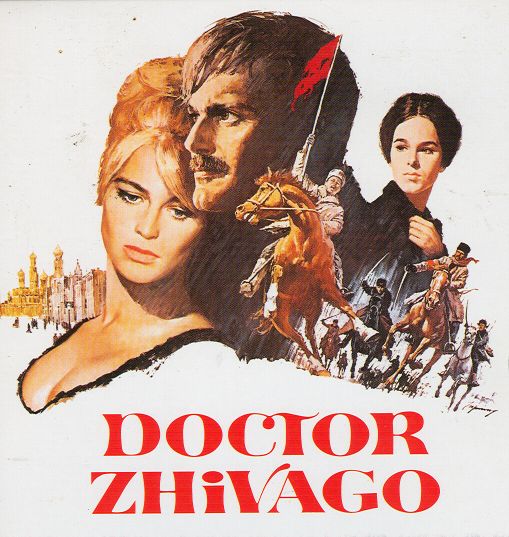
Like Dr. Zhivago
All my love I'll be sending
And you will never know cuz
There can be no happy ending
Main problem? It’s utterly incredible that any of those lunkheads have any idea who Dr. Zhivago is! The way they slur over it, they were probably just trying to get past it as quickly as possible. Oh, and it makes no sense, and adds nothing to the song.
Read more!

Thursday, 24 September 2009

Commodified complacency

0 comments
The old romance is gone. >>
@ Oldpixels.com


Earlier this week, one Google Alert email, among the bazillion of others that bombard my work inbox daily, caught my attention: “The state of dating on Wall Street,” it read. The link led me to a Fortune Magazine article called “Wall Street’s $25,000 matchmaker.” Compared to the other bland (but sometimes exciting in a geeky sort of way) items I read in my morning hours, this one seemed much more entertaining.

As it turned out – entertaining it was, but at the same time, unreal. A matchmaker that costs that much money, to me, seems to undermine the whole idea of a matchmaker, not least because it’s simply idiotic to hash out $25,000 (that’s one year’s worth of university education in some places!) to find someone to date. Doesn’t the fact that you would pay $25K for a dating service say something quite significant about yourself, beyond how much discretionary spending money you have? Or has certain parts of society reached a stage where spending thousands of dollars to find a good match is totally justifiable by reasons such as lack of time available, lack of opportunities to meet people – and what does that say about society itself?

Of all the industries to be considered as consumer discretionary, one would think that third-party dating services would be one of them. But apparently, such is not the case and south Manhattan is by no means the exception to the rule. Because when times get tough, purse strings get tighter but the heart gets looser. Or, at least more amenable to romantic possibilities. Internet dating – Match.com, OKCupid, DatingDirect, eHarmony, and the like – has seen more subscribers, for reasons ranging from more time available to devote to one’s private life, a perceived need for a supportive companion, and a means to split costs.

That’s all well and fine, but a matchmaking service that costs $25,000 seems rather crazy, especially considering the insight Samantha Daniels is giving. To the question, “Now that "I'm a hedge-funder" no longer does the trick, how would you advise bankers to market themselves romantically?” Daniels gave the following answer:
When you meet a woman, you should go back to the basics of who you are as a person – how you live your life, your interests. But it's also good to let someone know that you're doing well and have a stable job in this environment. The number one thing women are attracted to is confidence.
Right. In my humble opinion, that there are people out there who need to be reminded that on your first date, you don’t firstly talk about your income level (“I have an annual salary of $100,000 plus a $50,000 bonus”) and your job title (“I’m vice president of ___”) and the company you work for (“I work for JP Morgan, which is one of the few first-tier investment banks left in the world”), seems simply bizarre. Obviously, if that’s your starting point, then you’ve effectively narrowed yourself down to a pool of people who are looking for exactly those qualities, not the ones who look beyond that. So follows the question, “How do you convey financial stability without handing over tax statements?” and the answer, “My clients have a lot of toys and own a lot of homes. But if you tell someone that you own your own plane on a first date, it sounds like you're overcompensating for something.” Hammer that last nail in the coffin, why don’t you.

Of course, if that’s what you’re looking for, then good for you. By choosing a service such as Samantha’s Table, one does filter out those who allegedly wouldn’t be described as “ultra-successful, ultra-busy, ultra-cultured, and the ultra-educated.” But clearly, Daniels’ clients are not all looking to dig gold (or are they?), as the fact that her clients would pay $25K shows that people are doing whatever they can to find a good match, and one of such criteria – not the only – happens to hinge on income level (see “Money – or ambition? – and the City”).

What ultimately really bothers me about the proliferation of ‘exclusive’ dating services is that, it’s another way by which social categorization is effectuated. It’s subversive because it plays on our tendency towards the familiar, our fear of the unfamiliar, and our preference for convenience. It produces, encourages, and glorifies a social structure that is really based on purchasing power but is masked with labels like ‘success’, ‘culture’, and ‘intelligence’.

Surely, there is nothing wrong with someone seeking another of similar social standing, income, education, background, along with interests, lifestyles, hobbies, and the like. Just as our nature to greed, to hunger, and to reason can never be fully satisfied, nor will our tendency to stick with what we know, seek stability, and choose the easier way out. And to be sure, the subject of these actions can vary: we can greed for wealth or for justice, we can hunger for food or knowledge, we can reason with someone or out of a situation. But to put in place purchasable services that banks on people being lazy about human relationships can’t do very much good.

After all, relationships are supposed to require effort, pull you out of your comfort zones, make you think – often both about the other person as well of yourself – and push you to strike a balance for pretty much everything between you and your partner. They are full of prolonged sessions of diplomacy that for some eventuates in years of peace and hopefully, brief moments of turmoil. A service that tries to get you out of doing that will only make one complacent and naïve about what it takes to build human relationships, break them, and find ways to rebuild them.

Read more!

Saturday, 19 September 2009

Lazy hazy London

0 comments
It's a hazy, lazy day in London. In "Merry-fucking-Poppins" London. Around 4pm the skies have already turned a light orangish hue - on a clear day this time of the year it would still be pretty bright. My friends and I were mourning the end days of summer just a few days ago, and today it is muggy and humid again, with smells of an oncoming shower.

Not all days in London are hazy or lazy. In fact, it's very rare for London to be just hazy and lazy. Very often it's grey, cloudy, and on the coldest days of the year, foggy. And the city is always busy, wild, and energetic; there is no single moment when the city is still, waiting for something to happen, or merely calm for the sake of being calm.

But London is not Hong Kong. Or New York. Putting aside the fact that Chinese cities are a whole ball game on its own, the comparison between London and either of those two cities reveals very little. Architecturally, London is host to gianormous skyscrapers only on the shores of Canary Wharf - and even there, I would argue that it is quite benign compared to global standards - and having been a victim of bombings during the world wars, the rest of the city is a colorful patchwork of colonial, classical, neo-classical, modernist, minimalist, the occasional brutalist, buildings. Given that London's urban design has been structured so that government-sponsored housing lie throughout the city rather than in one of its corners, walking through it is like walking through multiple boundaries of space and time, over and over again.

And the roads - in my opinion, it's an infrastructural nightmare. The city was never built to have a massive public transport system as it does today. Lacking any grid-like formation and widths and lane numbers varying constantly, it's astonishing that motor traffic exists here. Add to it the growing trend of bicycles and you have a circus, occasionally producing the tragic casualty or two in hidden corners, blind spots, and busy intersections. Drivers, however, seem to care even less - they zoom past you as if they were the only ones on the road.

I think it is precisely this impression of instantly changing atmospheres, mismatched building styles, uncontrolled velocity, and organised chaos, that gives one the sense that London is busy, wild, and energetic. And it is on days like these, when London is hazy and lazy, and people are slowly strolling along the River Thames dreading that today is probably the last day of summer, that one can stop and see that this city is barely just the busy, energetic self it portrays itself to be. There's a feeling of rebellion throughout: it is a cosmopolitan city in a conservative, still class-based society; it has rough edges, alternative scenes, and is petty crime-prone, but also strives to incorporate green space, use glass in the newest buildings, and highlight its most prominent monuments with fancy lighting and glamour. It is proper and rowdy, green and grey, evolving and devolving. It is, literally, Merry-fucking-Poppins London.

Read more!

Thursday, 17 September 2009

“Oh it’s Thursday. How gruesome.”

0 comments
<< We love Holly!
@ Haymarket Theatre


Theatre Review: Breakfast at Tiffany’s and Streetcar Named Desire

True and true. Holly Golightly would certainly be impressed by the decadence and largesse of staying out until 1:00 on a Wednesday night (which is something I used to do every night mind you…ah the rigours of LSE life). And so would Blanche Dubois.

I have had the privilege of two exemplary theatrical experiences lately, one being Breakfast at Tiffany’s at the Royal Haymarket Theatre, and the other being Streetcar Named Desire at the Donmar Warehouse. Two powerfully tragic lead female characters, who also happen to be Southern belles with delusions of grandeur.

To varying degrees of destruction, both plays have a single, powerful message: men may come, men may go, they may try to control us, we may twist them around our little fingers, but ultimately they are not the biggest villains. The real demon to fight is getting through life without our logic and instinct for self-preservation being decimated by self-delusion.

Rachel Weisz glittered as Tennessee Williams’ seminal character Blanche Dubois, winning the audience over with every artifice, but always with a touch of darkness. We watch as a number of vulgarities enter her world, each time forcing another reality into her deluded mind. Then, each time, she constructs a new delusion, every time more dangerous, until Stanley Kowalski shatters them all.

Anna Friel’s Holly Golightly, Truman Capote’s most famous creation, is the same, and yet opposite. She takes care to have no imprint, no home, not even a name for her cat. She has no past as far as anyone’s concerned. She flutters in and out of her many suitors’ lives without a whisper of a care, leaving nothing but faint impressions of perfection.

If a lighter, more humorous touch is your preference, go see Breakfast at Tiffany’s [but don’t expect it to be anything like the film, it’s directly based on Truman Capote’s original story]. But Streetcar, with weight and history behind its darkness, left more of an imprint. Even today, I see Rachel Weisz teetering on the edge of sanity. I think of Anna Friel, and my brain goes to Chuck in Pushing Daisies.

Read more!

Monday, 14 September 2009

Book review: Lud-in-the-Mist

0 comments
One, long journey. >>
@Wikipedia


My copy of Lud-in-the-Mist, by Hope Mirrlees, sits on my dressing table. I can’t bear to put it away, but every time I see it fills me with envy for others who will embark on that journey, one that I can never take again.

And what a journey it was.

Written in the 1920s, 30 years or so before Tolkien transformed speculative fiction with Lord of the Rings, and rarely in print since, Lud-in-the-Mist is a fantasy written before fantasy became a genre. To give you an idea of its pedigree, it has blurbs written by both Virginia Woolf and Neil Gaiman, one attesting to the quality of the language, and one to the depth of imagination involved.

Genre-wise, Lud-in-the-Mist hops between fantasy, mystery, political drama and social drama. In today’s publishing world, this sort of thing would be edited out before publishing, and made to fit in one clean category.

The book is remarkable for its post-modern elements, especially in the characterization. Nathan Chanticleer is Our Hero, to use the phrase quite loosely. The fact that he’s laughable, boorish, and largely unlikeable elevates the plot from being about ‘a hero doing heroic things’ into the more realistic ‘man with neither wit nor charm nor strength nor magic is fighting for his family, and really makes quite a hash of it.’

All the characters are treading the soft line between dark and light; you can never be quite sure of your own footing within this treacherous world of music and madness. And that’s where the book really succeeds. Atmosphere. The beauty of not being an all-out fantasy. Very little of the book is set in the realm of the fairies, most of it is firmly set in a familiar Northern English town, where strangeness and uncertainty invade slowly and then more forcefully.

Lud-in-the-Mist is that extremely rare find, a highly literate novel, witty and warm, full of social commentary on educational practices for young women at the time, and the pedantic, back-biting nature of small-town politics. It reflects some of the common courtroom practices of the time, never sacrificing on language or imagery. It also happens to include magical fairies.

But when you feel a need to chase your Tesco-value copy of Dan Brown with something a bit more top-shelf, reach for Lud-in-the-Mist.

Read more!

Friday, 11 September 2009

Responsible intelligence

0 comments
<< Send those bankers to hell!
Darell Berry @ flickr


In celebration of the one-year anniversary of the collapse of Fannie Mae and Freddie Mac (7 September), Lehman (15 September), and Washington Mutual (25 September), I solemnly made a resolution to myself that I would step off the bandwagon and encourage others to do the same.

Approximately a year ago, on a late night in the office, I remember my colleague being on the phone with a trader at one of the large banks, which has since been lucky enough to survive the global downturn. The trader had told my colleague, "This isn't good. Wait. This is very very bad." Similar statements of hopeless fear and utter panic were allegedly heard everywhere that night on Wall Street, in Canary Wharf, and every other financial district in the world.

Who knew that a year on, the markets would be back up and still functional? Sure, there are ample liquidity problems and trading strategies are now more vanilla than ever, but a year ago, the financial services industry thought, This is it. The world is over.

Regardless of whether or not we call the current downturn a recession or depression, no one would disagree that fourth quarter 2008 was some of the most panicky months the world has seen in decades. Emergency measures were taken by several governments and central banks, including an interest rate cut down to pretty much zero. Money has been lent, guarantees were given (albeit arguably belatedly), and now the hottest topic is about figuring out a regulatory framework for the financial industry going forward.

The best thing about time is that it keeps going, and the great thing about that is that we can now look back and think - critically - about what happened and why.

The general media has been horrible about this, in a time when they should be the ones spearheading a more critical approach. One could understand the polemical stance the Times took last October, when one journalist concluded:
The stresses in the financial markets partly reflect bad policy decisions that made sense at the time - such as central banks keeping interest rates low after 9/11, and owing to the effect of Chinese imports in restraining inflation. But this time, there is a justifiable anger at the insouciance of the bankers, who irresponsibly exploited those decisions. The demonology has new life in it.
But recent news about the G20, proposing to regulate bankers' pay, coverage of the Kraft/Cadbury merger, to the private lives of certain bankers, continue to sustain this so-called 'demonology'. And it's not helping the situation, at all.

To be fair, certain media outlets have always been rather sensationalist, because it no doubt brings in the dough. In a time when advertisements are being cut, and less people are spending on superfluous things, most media firms and their journalists are likely to make an extra effort to make news sound more scandalous, more evil, more conspiratorial, and therefore more of a 'must-read' item - a bigger deal - than it actually is. If that's what some media do, then so be it; not every outlet can be a saint.

However, I came upon a rather shocking phenomenon recently, when in conversations with my friends about the financial crisis, they came up with some of the most uninformed, uncritical statements about the causes and who was to blame. According to them, bankers were to be despised, the fault was at the bulge-bracket banks, none of the governments' emergency measures were effective, and so on and so forth.

The shocking part was, although I give them the benefit of the doubt that most of them have done their reading, my friends all happen to be very well-educated, and ambitious, critical thinkers. All of us were brought up and educated that way - to be critical of our sources, the things that we read, hear, and see. And yet a good handful of them had jumped onto the bandwagon in the last year with the rest of the world, pointing accusatory fingers at the towers along Wall Street or in Canary Wharf, or to No. 10 Downing Street or the White House in DC, and all those who dwelt, left, or continue to dwell in them.

But I say: GET OFF THE BANDWAGON. Be responsible about your intelligence. It's been a year now, and it's about time we look at the so-called "Great Recession" with a more critical eye. Look past the headlines and the polemical opinion columns, the supposedly less-polemical editorials, even the blogosphere - yes, even this one, too! - and the likes of Wikipedia. Step back and take a critical - not skeptical - view: What caused the financial crisis?

To point my own finger on one of many broader causes, I will outwardly wonder about what is going through the heads of the CFOs, the CEOs, the top regulators and central bankers of the world, if some of my smartest friends have ditched the recognition that we no longer live in an era where causation is linear. In fact, the human species probably never has lived in an era where causation was entirely linear; we just chose to see it that way. And now, with the tangible effects of globalisation, we can see with our naked eyes that causation is circular, networked, and widespread. In short, there is no one cause to an effect; there are many, many more than we can probably fathom.

No single bank or trader, or hedge fund, could have crippled the entire financial system in the way it was last September. The subprime mortgage crisis preceded it. So clearly, that was a factor. US interest rates were kept low all through out it. That's also another factor. What was once simply hedging instruments became tradable on an exchange - also another factor. The list is endless.

And what are the regulators now going back to? More stress tests, more financial modelling, more scientific and mathematical analysis of trades, companies, and risk. But, do they not see what they're doing? What have they learned? Where is the critical thinking, the investigative spirit? So I will boldly point a finger to one (of many, to be precise) cause, right here and now: lack of critical thinking.

We relied on financial models to tell us how a trade would perform in the future. We have, thus far, relied on stress tests to find out how much stress a bank can undergo before its legs give away and the whole thing comes tumbling down. One can even distill this trend on hiring patterns: most of the financial services vacancies advertised will ask for numerical skills, or some background in finance, risk management, or credit risk analysis.

Clearly, we haven't learned anything. As one market participant recently told me, "Investment bankers have the memory of a dragon fly." But that probably applies more broadly than we'd like to admit. The lack of critical thinking prevalent amongst my peers, goes all the way up to the CEOs and CFOs and CIOs and regulators, central bankers, and to the governments' finance ministers. The exact approach - reliance on modelling and number-crunching - that we thought heralded the credit boom in the mid-2000's, was the exact thing that turned the boom into a crunch, and is now the exact thing that we're turning to once again to bring about a boom. Needless to say, it's more likely that it will simply stretch out the recession, than resolving it.

Most importantly, demonising bankers, or certain banks, could end up hammering the last nail in the coffin, so to speak. The global financial industry currently stands at a crossroads: we can choose to learn from the mistakes, learn from the ways certain financial instruments and their investors (mis)behaved, and rebuild the industry from there, or we can choose to condemn those instruments and all involved in their (mis)behaviour, install rules and regulations, and effectively, start from scratch. Hence, as one regulator aptly put it, the regulations we adopt today will have no bearing on future financial crises. Of course: if we take the latter road, we are effectively reinventing the wheel.

Some of us are educated about certain things in the world more than others. I have no doubt that the ability to think critically about causal relationships - actively asking oneself, what is the cause and what is the effect - is an acquired skill, and a cherished one at that. But for those of us who do have the means to understand what happened, who have the means to read a newspaper article and think twice about it, should. Rights come with responsibilities, and being responsible about your acquired intelligence, is one of them.

Read more!

Wednesday, 9 September 2009

RESPONSE: Property rights - overrated?

0 comments
Overrated?Property rights are overrated.>>
saxarocks @ flickr


Even though we probably don't have many readers as of yet, given that it's encouraged some lively discussion in the comments arena, I thought it might be worth actually posting a response to theoncominghope's most recent post, "Piracy: Capitalism at work."

While I agree that piracy involves stealing and violating rights, remains a major concern amongst almost all sectors, and for the person whose product has been pirated the experience is far from pleasant, I'm not sure if one can make the leap from 'piracy' to the 'annihilation' of property rights.

For example, in the context of pharmaceuticals, I think you have to look at why piracy occurs to begin with - that is, the unavailability of certain pharmaceuticals. If everyone had access to most drugs when they needed it for a reasonable cost, I don't think you would have the same kind of problem of 'piracy' (or in this case, violation of intellectual property rights). On the one hand, such a situation would virtually nullify any incentive to reproduce a drug because it wouldn't make economic sense; if you can purchase it at a reasonable price/cost, then why spend the time, effort, and money to reproduce it? On the other hand, the same situation would also incentivise those who think they can reproduce the drug at a lower cost, supply it at the same price as the original, and make a profit.

In either of those scenarios, property rights aren't completely annihilated, because while pirated products do tend to find themselves distributed widely, the market for the original product continues to exist (albeit arguably in a less dominant manner than in previous generations). The products and processes used to create that product have been adapted. And for all intents and purposes, until a new form of technology comes along (which is probably more just a matter of time), or the downsides of a less-quality product are heartfelt by its consumers, the effects of one act of piracy are quite temporary.

This, of course, is not to say that the various consequences of these actions are any less significant, and I will get to this point shortly.

Either way, whether or not property rights are destroyed in either of the abovementioned scenarios is a mull point, because neither of those situations currently exist in the pharmaceutical sector. Certain pharmaceutical products are either unreadily available because the cost of production is too high for mass production, or are mass-produce-able but supply is limited, demand is uncontrolled and unsatiated, thus artificially pushing up prices, allowing companies to make a large profit. My humble opinion is that, given the political economy of pharmaceuticals, a little bit of piracy might actually do some good.

And to quickly address the profit-making incentive: government subsidies for R&D coming out of taxation, and removal of any taxes in the production of pharmaceuticals.

I suppose the problem is that from my macro perspective, piracy, or the infringement of (I)PR, or whatever you want to call it, is actually not such a 'big deal', for a lack of a better phrase. The reality is, much like financial services regulation, people will always find new ways to produce something for a lesser cost. Not even the prospect of the death penalty, or national deportation, will stop them; in fact, the higher you raise the stakes, the more profitable, and more criminal, of an industry it will become. If you really wanted to address 'piracy', you have to look at what incentives are, either by chance or purpose, in place that are driving certain people to forge a product.

The other issue I have with the violation of IPP/property rights in general from a more philosophical standpoint (wince!), is our continued obsession with the territoriality of material things. It's not that I've turned into a materialism-hating hippie overnight, but that the obsession itself is unsustainable. The reason why I take issue is because the world is changing. The best example is media. In about two or three decades, there will no longer be CD's - in fact, they will be super-expensive to produce and buy. Around the same time, broadsheets will disappear, as will consumer magazines, books, concert tickets, and flyers. My not-very-well-thought-out but gut-feeling is that the pulp and paper industry will actually turn into a consumer discretionary sector from the non-cyclical industrial sector it is now. This is to say that paper will become a luxury item, and there will only be a select few companies that will produce it. In fact, it's already starting. A Canadian newsprint company, AbitibiBowater, filed for bankruptcy in April this year, because newsprint consumption in the US fell off the cliff by 29%.

The music industry has already changed in this way. We went through a period where music became a hotly demanded commodity, and it was a ludicrous business on the production side to enter as long as you were at the right place at the right time with the right shit. On the consumer side, before MP3's became rampantly distributed, we all had to buy CD's or tapes, which we then developed the technology to copy at home and then re-distribute to our friends. But with the advent of MP3s and other alternative digital sound files that are easily distributable, CDs, tapes, and records became massively expensive to produce, and hugely inconvenient to purchase. The demand for music hardware (CDs) from consumers went down, pushing down supply (as well as the incentive to supply), while the production side of the music industry wanted to maintain the same level of income and profit. The business model is completely unsustainable. Something has to give.

Unfortunately, it will remain unsustainable until the music industry figures out a different way to fix the imbalance, or else the economy will do it on its own by scrapping the current music industry-model all together. Most likely - and this is where I stand with theoncominghope - not only will musicians have to be more creative in the way they produce and distribute their work, but their expectations for profit will also have to come down, especially given that the advertising industry will also undergo a massive change in the next few years. What the greater implications are of such changes - well, I'll leave it to your imagination to speculate.

Now, to address the more tangible issues arising from piracy: the micro perspective. Even though I basically say above in a more nuanced way, that property rights are somewhat overrated, the protection of individual rights to property ownership is quite important. In the far, tiny land of East Timor, one of the major obstacles to infrastructural development and peace, no less, is the lack of a legal framework about property rights. During its conflict with Indonesia, the Timorese underwent a series of uprooting from, and redistribution of, land the people formerly lived on. In post-conflict Timor-Leste, people continue to fight - physically and legally (in the latter case, as much as they could) - over ownership of certain pieces of land. It doesn't help that the country had been in conflict for so long that not only are 'official' records unavailble, the people themselves don't exactly have matching accounts of their ownership. The cases are also exacerbated by each party's familial (read: ancestral) attachment to the land and are wrapped up in many layers of tradition and practice with regards to conflict resolution. Many NGOs and IOs working on consultation programmes, therefore, have unilaterally pointed to the lack of property rights law as one of the most signficant obstacles to peace in Timor-Leste.

So at the micro-level, property rights are far from overrated. However, whether they are implicated in the music industry or in a small, undeveloped, post-conflict country, the importance of active regulation of property rights should be emphasised. But, that's not to say that you can just overburden them with regulation. The question to consider is the type of incentives, to place where, and when, and also recognising that even with adequate incentives, people will find ways to get around it. The fear is not underregulation, but overregulation. Some freedom - read: leniency and ability to change - will be key.

Read more!